
Since the discovery of the Ebola virus in 1976 until the most recent outbreak, there were 18 recorded Ebola outbreaks that resulted in the deaths of 1,628 people. Almost seven times as many died as the virus spread across Guinea, Liberia and Sierra Leone in 2014 and 2015.
Whilst the slow reaction of both the international community and the respective governments has been recognised, insufficient attention has been paid to the important role of local health workers, burial teams and community-led initiatives in controlling the epidemic. These actors were successful, in part, due to their understanding and recognition of local practices and how best to control the spread of disease in the local context.
Pujehun, one of Sierra Leone’s most impoverished districts that neighbours both Kenema and Kailahun – two districts heavily affected by the virus – limited the number of deaths to just 24 through pro-active community-led vigilance. The District Youth Council was integral in establishing a strong surveillance system across the districts’ 12 chiefdoms and in ensuring robust social mobilisation mechanisms were complied with. With the support of religious leaders and youth representatives, the outbreak was contained, with limited international or central government support.
A report by the All Party Parliamentary Group for Africa draws attention to other effective local approaches and similar initiatives are also highlighted in Paul Richards book Ebola: How a People’s Science Helped End an Epidemic. Richards argues that where communities were properly educated about the virus and its transmission – rather than directed to do something unfamiliar without understanding the reason why – they were more willing and quicker to adapt. The adaptability and resilience of communities was demonstrated in examples where disease control strategies were incorporated into secret society burial rituals, new dance styles were created to avoid touching and bin-liners were used to allow for home care of patients with reduced risk of infection.
It has been acknowledged that initial efforts by central authorities and several international donors to disseminate public health messages that intended to promote protective behaviours, may have had the opposite effect – discouraging people from seeking treatment due to the high mortality rates reported in the media. However gradually, and with leadership from the National Ebola Response Centre (NERC), the centralised response became more connected with local initiatives and devised messaging that was less instructive and more informative. The two together, helped to control local Ebola transmission.
What the success of Ebola control at the local level has taught us is that there is a critical need for far greater awareness of – and adaptation to – local contexts as well as the importance of listening to and learning from affected communities. These may not be new ideas, but they were absent from much of the “strategic” thinking and planning employed during the crisis.
Jamie Hitchen is Policy Researcher at Africa Research Institute. He has previously lived and worked in Sierra Leone. During the Ebola crisis he authored several articles looking at the long-term implications on the country.
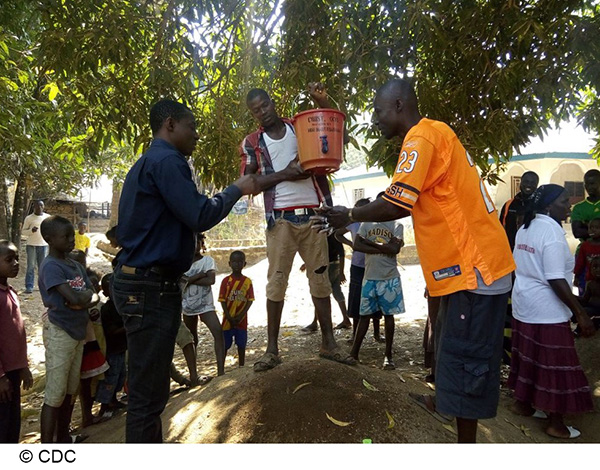
Image credit: CDC – “This image depicts Dr. Olayinka Ilesanmi, as he was demonstrating the correct method of hand washing, and why it’s a very important tool in infection prevention and control to community members at Masongbo village, in the Bombali district of Sierra Leone. This demonstration is part of the health education program facilitated by the Nigerian Field Epidemiology Training Program (NFETP) residents, during the Ebola outbreak response in Sierra Leone, January, 2015.”
Leave a Reply